Q181JEE Main 2021MCQ
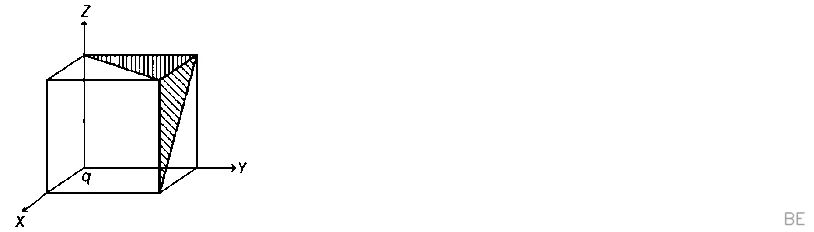
A charge is placed at one corner of a cube as shown in figure. The flux of electrostatic field through the shaded area is
JEE Main · Physics
Generate JEE Main level questions on Electrostatics. Focus on Coulomb's law, Electric field, and Gauss's theorem.
280 questions · 20 PYQs · 0 AI practice · JEE Main 2027
A charge is placed at one corner of a cube as shown in figure. The flux of electrostatic field through the shaded area is
A particle of mass and charge is lying at the mid-point of two stationary particles kept at a distance '2 ' when each is carrying same charge 'q'. If the free charged particle is displaced from its equilibrium position through distance ' . The particle executes SHM. Its angular frequency of oscillation will be _____ if
Two ideal electric dipoles and , having their dipole moment and respectively are placed on a plane with their centres at as shown in the figure. At point on the axis of dipole , the resultant electric field is making an angle of with the axis. The ratio of the dipole moment of and is : take )

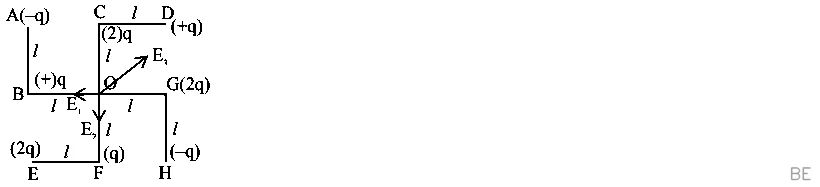
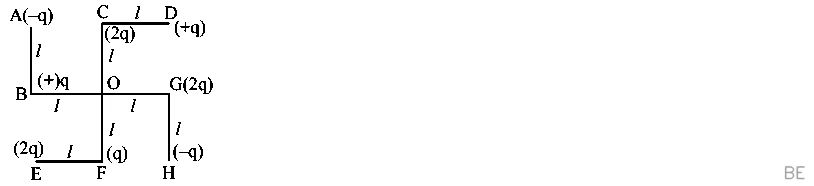
What will be the magnitude of electric field at point O as shown in figure? Each side of the figure is l and perpendicular to each other?
Choose the incorrect statement. A. The electric lines of force entering into a Gaussian surface provide negative flux. B. A charge q is placed at the centre of a cube. The flux through all the faces will be the same. C. In a uniform electric field net flux through a closed Gaussian surface containing no net charge is zero. D. When electric field is parallel to a Gaussian surface, it provides a finite non-zero flux. Choose the most appropriate answer from the options given below.
An oil drop of radius with a density is held stationary under a constant electric field in the Millikan's oil drop experiment. What is the number of excess electrons that the oil drop will possess? (Take, )
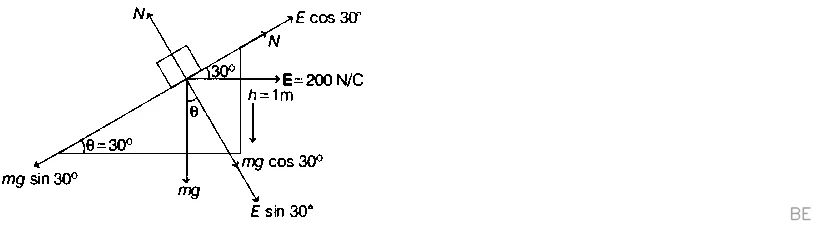
An inclined plane making an angle of with the horizontal is placed in a uniform horizontal electric field as shown in the figure. A body of mass and charge is allowed to slide down from rest at a height of . If the coefficient of friction is , find the time taken by the body to reach the bottom. Take,

An infinite number of point charges, each carrying charge, are placed along the -axis at . The total force on a point charge, placed at the origin, is . The value of to the nearest integer, is .............. . (Take, \;\frac{1}{4 \pi \epsilon _{0}}=9 \times 10^{9} {N}- {m}^\frac{2}{C}^{2} )
Two infinite planes each with uniform surface charge density + σ are kept in such a way that the angle between them is 30°. The electric field in the region shown between them is given by: [7-Jan-2020 Shift 1]
Consider a sphere of radius R which carries a uniform charge density ρ. If a sphere of radius is carved out of it, as shown, the ratio |E_\vec{A}/E_\vec{B}| of magnitude of electric field E_\vec{A} and E_\vec{B}, respectively, at points A and B due to the remaining portion is :

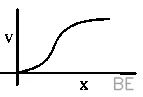
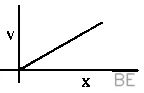
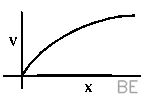
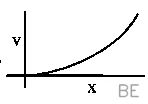
A particle of mass m and charge q is released from rest in a uniform electric field. If there is no other force on the particle, the dependence of its speed v on the distance x travelled by it is correctly given by (graphs are schematic and not drawn to scale)
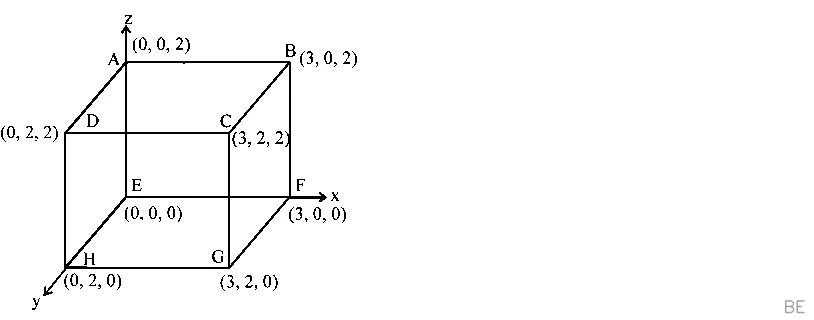
An electric field N /C passes through the box shown in figure. The flux of the electric field through surfaces ABCD and BCGF are marked as and respectively. The difference between is (in /C)____________.
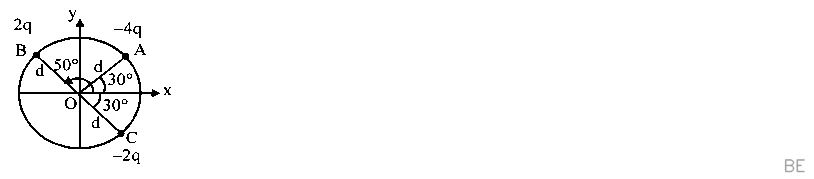
Three charged particle A, B and C with charges -4q, 2q and -2q are present on the circumference of a circle of radius d. the charged particles A, C and centre O of the circle formed an equilateral triangle as shown in figure. Electric field at O along x-direction is :
Charges and arc at points and of a right angle triangle OAB (see figure). The resultant electric field at point is perpendicular to the hypotenuse, then is proportional to :

Consider the force on a charge 'q' due to a uniformly charged spherical shell of radius carrying charge Q distributed uniformly over it. Which one of the following statements is true for if 'q' is placed at distance from the centre of the shell ?
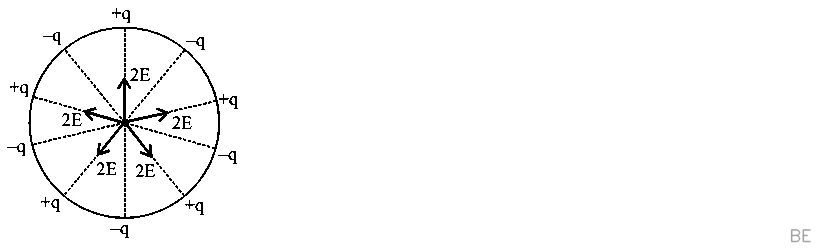
Ten charges are placed on the circumference of a circle of radius with constant angular separation between successive charges. Alternate charges 1,3,5,7,9 have charge each, while 2,4,6,8,10 have charge each. The potential and the electric field at the centre of the circle are respectively: (Take at infinity)
Concentric metallic hollow spheres of radii and hold charges and respectively. Given that surface charge densities of the concentric spheres are equal, the potential difference is :
An electric dipole of moment p ^{\to }= (-i ^{\^}- 3j ^{\^}+ 2\hat{k}) \times 10^{-29}C .m is at the origin (0, 0, 0). The electric field due to this dipole at \vec{r} = +\hat{i} + 3 j ^{\^}+ 5\hat{k} (note that ) is parallel to:
A small point mass carrying some positive charge on it, is released from the edge of a table. There is a uniform electric field in this region in the horizontal direction. Which of thefollowing options then correctly describe the trajectory of the mass ? (Curves are drawn schematically and are not to scale).

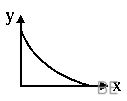
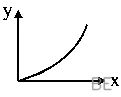
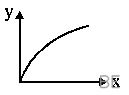
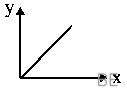
A particle of charge q and mass is subjected to an electric field in the -direction, where a and are constants. Initially the particle was at rest at Other than the initial position the kinetic energy of the particle becomes zero when the distance of the particle from the origin is :
Want unlimited AI-generated Electrostatics questions?
Sign up free and practice with adaptive difficulty — Easy, Medium, Hard. New questions every session.
Start practising for free →